Best Sleeping Positions for Sciatica: How to Sleep on Your Back or Side
Sciatica can make it difficult to find a comfortable sleeping position. Depending on how you lie, pressure on the lower back, buttocks, and legs may increase and make pain or numbness feel worse.
This guide explains more comfortable ways to sleep on your back or side, positions that may aggravate symptoms, and common conditions that can cause sciatica.
目次
- What Is the Best Sleeping Position for Sciatica?
- Back or Side Sleeping Is Generally Recommended
- Sleeping With Sciatica ① On Your Back
- Back-Sleeping Position to Avoid
- How to Make Back Sleeping More Comfortable
- Sleeping With Sciatica ② On Your Side
- Avoid Bringing the Upper Leg Too Far Forward
- Keep Your Legs Slightly Bent
- What Causes Sciatica?
- Herniated Disc
- Lumbar Spinal Stenosis
- Piriformis Syndrome
- Other Possible Causes
- Sleep in a Position That Reduces Sciatic Pain
What Is the Best Sleeping Position for Sciatica?

When you have sciatica, the way you sleep can affect how much strain is placed on your lower back. A supportive sleeping position may reduce pressure, while an awkward position can make symptoms worse.
Back or Side Sleeping Is Generally Recommended
The source article recommends sleeping on your back or side when sciatica is painful. Sleeping on your stomach is best avoided because it can increase the arch in the lumbar spine and place more stress on the lower back.
Even when sleeping on your back or side, however, an unsupported position may increase pressure on the muscles around the buttocks and thighs. Staying in exactly the same position for too long can also make the muscles feel stiff, so changing position occasionally may help.
Sleeping With Sciatica ① On Your Back
Back sleeping can be comfortable for some people with sciatica, but the position of your legs and lower back matters.
Back-Sleeping Position to Avoid
Avoid lying flat with both legs completely straight. This position can increase pressure from the buttocks through the backs of the thighs and calves.
It can also extend the hips and increase the arch in the lower back, potentially worsening lower back pain. The source article also advises against placing a cushion or towel directly beneath the lower back.
How to Make Back Sleeping More Comfortable
When sleeping on your back, try keeping your knees bent. Rather than consciously holding the knees up while you sleep, place a soft cushion or pillow beneath them for support.
Using a soft cushion where it contacts the legs can also help reduce pressure.
Sleeping With Sciatica ② On Your Side
Side sleeping can place relatively little strain on the lower back, but the lumbar spine has less support in this position and may bend sideways. Proper positioning can therefore make a difference.
Avoid Bringing the Upper Leg Too Far Forward
When sleeping on your side, avoid letting the upper leg fall far forward. This may pull on the muscles and sciatic nerve from the buttocks down toward the calf.
It can also twist the hip and leg, potentially increasing strain and worsening lower back pain.
Keep Your Legs Slightly Bent
The source article recommends lying with the painful side facing upward, gently bending the hips and knees, and slightly rounding the upper body.
Place a cushion or folded towel between the legs to prevent the upper leg from falling forward. If the natural curve at your waist leaves the lumbar spine unsupported, a thin folded towel or soft support around the waist may help fill the gap.
A body pillow can also help stabilize your position and reduce the need to tense the lower back while sleeping.
What Causes Sciatica?
Sciatica is a general term for pain, numbness, or other symptoms affecting the lower body due to an underlying condition. Symptoms can extend from the lower back into the buttocks, legs, and feet.
Because several different conditions can cause sciatica, consider medical evaluation if you are concerned about ongoing or severe symptoms.
Herniated Disc
A lumbar herniated disc is one possible cause of sciatica. Part of an intervertebral disc protrudes and compresses a nearby nerve, leading to pain or numbness.
Posture, movement patterns, physical characteristics, bone structure, and age may all be associated with the condition.
Lumbar Spinal Stenosis
Lumbar spinal stenosis can also cause sciatica. The spinal canal becomes narrower and compresses the nerves inside it.
A characteristic symptom described in the source is pain while walking that becomes easier after resting.
Piriformis Syndrome
Piriformis syndrome occurs when the piriformis muscle, which lies close to the sciatic nerve, becomes tight and places pressure on the nerve.
Sports, prolonged sitting, and physically demanding work are among the factors that may cause the piriformis muscle to become tight.
Other Possible Causes
| Other Possible Causes | Lumbar spondylolisthesis / Sacroiliitis / Muscle weakness |
|---|
Some causes of sciatica are difficult to identify without professional assessment. Avoid relying only on self-diagnosis, especially when symptoms persist or worsen.
Sleep in a Position That Reduces Sciatic Pain
If sciatica is keeping you awake, adjusting your sleeping position may help reduce stress on the lower back and legs.
Try supporting your knees when lying on your back or keeping your legs gently bent with a cushion between them when sleeping on your side. The goal is to find a position that reduces pressure without forcing your body into an uncomfortable posture.
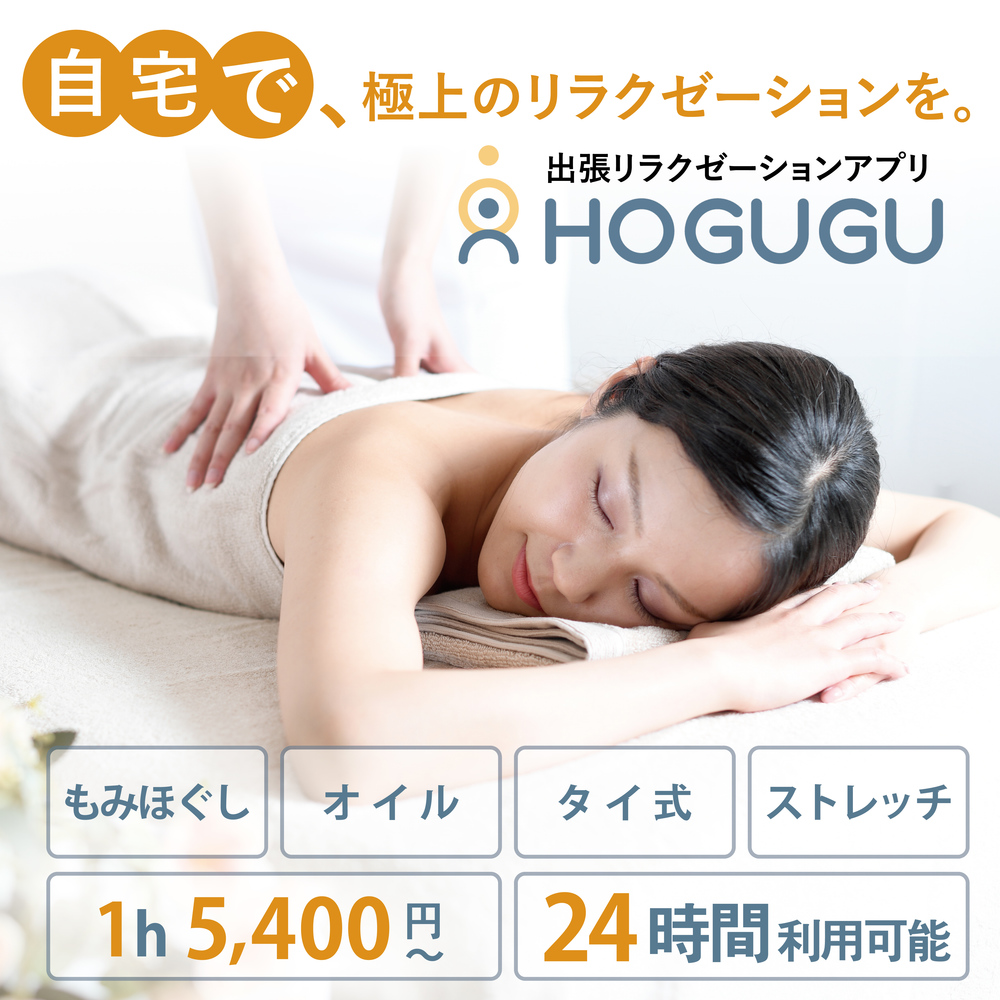
Relax and Refresh With HOGUGU
If daily fatigue is building up, why not enjoy professional relaxation at home?
With HOGUGU, a therapist can visit your home or accommodation, so you can receive professional massage and relaxation care without having to visit a salon. Reservations can be made through the app 24 hours a day, making it convenient after work, on weekends, or when you simply do not feel like going out.
HOGUGU therapists have passed a strict screening process with an acceptance rate of around 10%, allowing users to choose from carefully selected professionals.
HOGUGU has recorded more than 335,439 on-demand relaxation bookings and over 225,090 reviews as of August 2026. You can compare therapist profiles, treatment menus, and prices in advance to find an option that suits your needs.
Real experience reports and app-exclusive coupons are available here.
See detailed instructions on how to use HOGUGU.
This article contains some promotional content.
Source references in the original article: MSD Manual Consumer Version, “Sciatica”; Japanese Orthopaedic Association, “Lumbar Spinal Stenosis.”
日々の疲れを癒すなら『HOGUGU』で
日々の疲れが溜まっている方は、お家でプロのリラクゼーションを受けてみませんか?
家から出たくない日や、夜遅い時間でも、『HOGUGU(ホググ)』なら自宅で簡単にプロのもみほぐしを体験できます。セラピストが自宅や宿泊先に来てもみほぐしを行ってくれるので、わざわざ整体やマッサージ店へ出向く必要もありません。
HOGUGU(ホググ)では、合格率約10%の厳しい審査を通過したセラピストが施術を担当しているため、確かな技術を持つプロの施術を自宅や滞在先で受けられます。
「忙しくてケアの時間が取れない…」という方も、HOGUGU(ホググ)なら好きな時間・好きな場所で施術を受けることが可能です。アプリから24時間いつでも簡単に予約できるので、仕事終わりや週末のリラックスタイムを充実させられるでしょう。
また、出張リラクゼーション予約数335,439件・口コミレビュー数225,090件以上を誇り、多くの方に選ばれ続けています(※2026年8月現在)。さらに、施術や料金の比較もできるため、自分にぴったりのセラピストを選べるのも魅力です。
極上のリラクゼーションで、日々の疲れをリフレッシュしませんか?
まずは、日本最大級の出張リラクゼーションプラットフォーム『HOGUGU(ホググ)』アプリを無料ダウンロードして、自分に合ったセラピストを見つけてみてください!
(この記事は一部プロモーションを含みます)